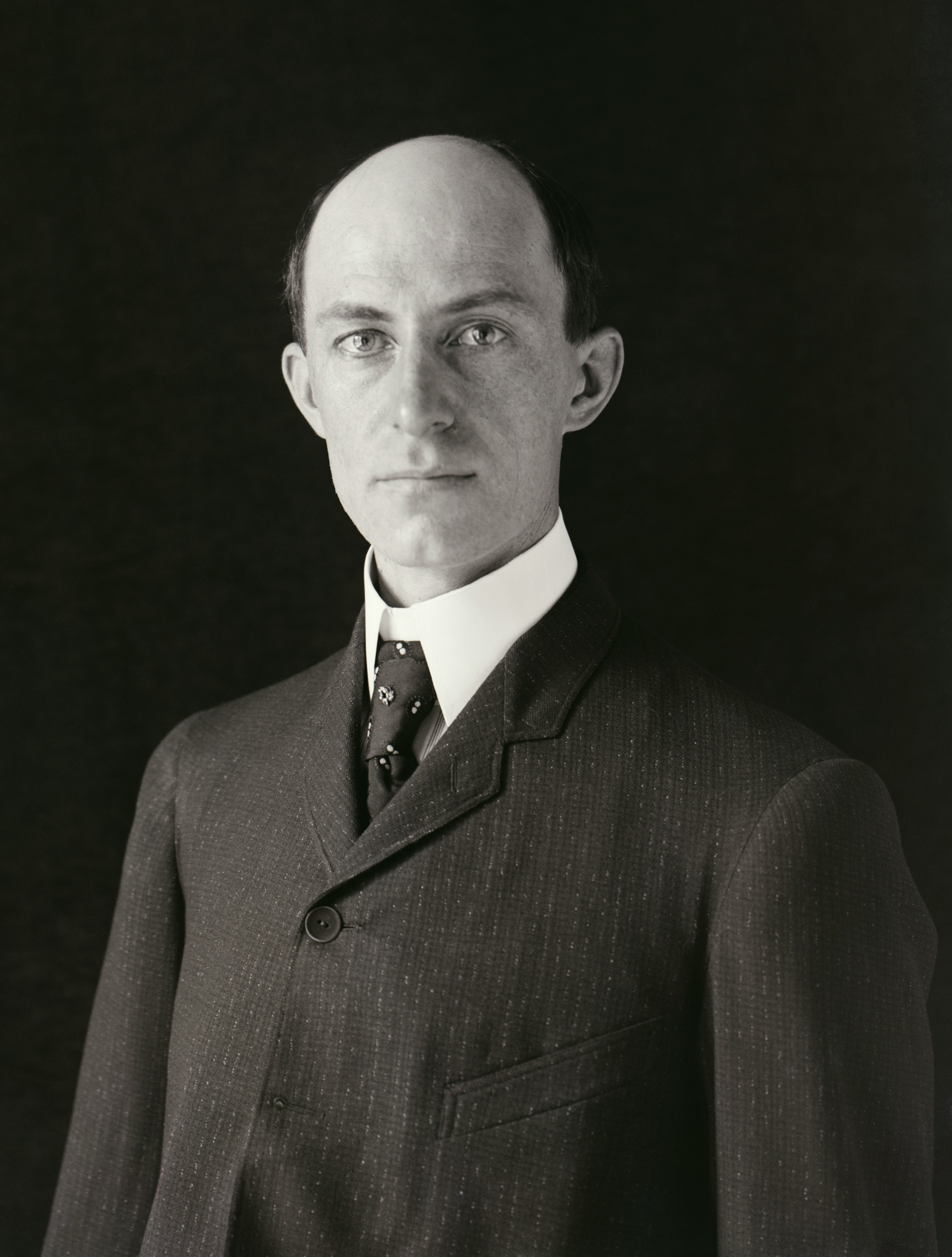
The man who lived to survive the long war.
 The man who was the best at flying. The man, whose name, was feared by many of his adversaries. He is Erich Hartmann (Erich Alfred "Bubi" Hartmann.).
When he was young...
Born in Weissach, Wurttemberg, Germany, on April 19th, 1922, Hartmann had spent most of his childhood in Asia, as his father, Alfred Erich Hartmann, was a doctor working in China. He returned to Germany in 1928. There, he attended the Volksschule in Weil im Schonbuch starting from April, 1928, till April 1932. He then continued his education in the Gymnasium in Boblingem from April, 1932, to April, 1936, and then in the National Politics Institutes of Education in Rottweil from April, 1936, to April 1937. In the Gymnasium in Korntal, which he attend for 3 years (April, 1937, to April, 1940.), he recieved his Abitur.
Hartmann first learned how to fly when he joined the glider training program of the new, and growing German
Luftwaffe. It was sometime during his years of studying. Elizabeth Wilhelmine Machtholf, his mother, was the one of the first female glider pilots, and who was the one who taught Erich how to fly. She had a license from the Boblingen flying club. Also sometime during Erich's studying years, the Hartmanns bought a light, and small aircraft, but due to the collapse of the German economy in 1932, was forced to sell it.
Military Career...
Into the Luftwaffe
Hartmann got his "wings" in 1941 and was assigned to the fighter wing Jagdgeschwader 52 in October 1942. JG 52 was stationed on the Eastern Front in the Soviet Union and was equipped with the Messerschmitt Bf 109G. JG 52 were based at Maykop, but Hartmann and several other pilots were to ferry several Junkers Ju 87 Stukas down to Mariupol, as there were not any replacement Bf 109s needed by JG 52. Hartmann's first flight in the Stuka ended in a crash due to brake failure. The Junkers went straight into the controller's hut, destroying it. The commander of III./JG 52, Gruppenkommandeur Major Hubertus von Bonin, placed Hartmann under the experienced Oberfeldwebel Edmund "Paule" Roßmann, but Hartmann also flew with such experienced pilots as Alfred Grislawski, Hans Dammers and Josef Zwernemann. After a few days of intensive mock combats and practice flights, Grislawski admitted that, although Hartmann had much to learn regarding combat tactics, he was a quite talented pilot. But it was Paule Rossmann that taught him the fundamentals of the surprise attack, a tactic, which would lead to Hartmann's "See – Decide – Attack – Reverse" style of aerial combat.
Hartmann flew his first combat mission on 14 October 1942 as a wingman of Paule Rossmann. Rossmann radioed that he had spotted ten enemy aircraft below. Hartmann became overly exited and obsessed by the idea of scoring his first kill. Hartmann opened full throttle and left his leader Rossmann as he started to open fire on one enemy fighter. His shots missed and he almost collided with the enemy aircraft. Now surrounded by the Soviets, he headed for the low cloud cover to escape. Neglecting Rossmann's orders and running out of fuel, the engine stopped and Hartmann crash-landed his aircraft. Hartmann had violated almost every rule of air-to-air combat, and von Bonin sentenced him to three days of working with the ground crew. Twenty-two days later he shot down his first Soviet victim on 5 November 1942, an Il-2 from 7 GShAP (7th Guards Ground Attack Aviation Regiment). By the end of the year he had added only one more kill and, as with many top aces, took some time to establish himself as a consistently scoring fighter pilot.
The Oak Leaves to the Knight's Cross
n January – February 1944, Hartmann claimed 50 kills in 60 days. Throughout 1944, Hartmann claimed 172 victories, a total surpassed only by his friend Wilhelm Batz. Hartmann continued scoring at an even greater pace. His spectacular rate of kills raised a few eyebrows even in the Luftwaffe High Command; his claims were double- and triple-checked, and his performance closely monitored by an observer flying in his formation. On 2 March, he reached 202 kills. By this time the Soviet pilots were familiar with Hartmann's radio call-sign of Karaya 1 and the Soviet Command had put a price of 10,000 Rubles on the German pilot's head. Hartmann, for a time, used a black Tulip design around the engine cowling near the spinner of his aircraft, so Soviet personnel consequently nicknamed him Cherniye Chort ("Black Devil"). However, Hartmann's opponents were often reluctant to stay and fight if they noticed his personal design. As a result, this aircraft was often allocated to novices, who could fly it in relative safety. On 21 March, Hartmann scored JG 52s 3,500th kill of the war. Adversely, the reluctance of the Soviet airmen to fight, caused Hartmann's kill rate to drop. Hartmann then had the tulip design removed, and his aircraft painted just like the rest of his unit. In the following two months, Hartmann amassed over 50 kills.
In March 1944, Erich Hartmann, Gerhard Barkhorn, Walter Krupinski and Johannes Wiese were summoned to Adolf Hitler's Berghof in Berchtesgaden. Barkhorn was to be honoured with the Swords while Hartmann, Krupinski and Wiese were to receive the Oak Leaves to the Knight's Cross. On the train all four of them got drunk on cognac and champagne. Supporting each other and unable to stand they arrived at Berchtesgarden. Major Nicolaus von Below, Hitler's Luftwaffe adjutant, was shocked. After some time of sobering out, Hartmann was still intoxicated from the alcohol. Hartmann took a German officer hat from a stand and put it on, but it was too large. Von Below became upset and told Hartmann it was Hitler’s and ordered him to put it back.
The Diamonds to the Knight's Cross
On 23 August 1944 Erich claimed eight victories in three combat missions bringing his score to 290 victories. Erich Hartmann passed the 300 kill mark the on 24 August 1944, a day on which he shot down 11 aircraft in two combat missions bringing the number of aerial victories to an unprecedented 301 victories. He was immediately grounded by Luftwaffe chief of staff Hermann Göring, who was fearful of the effect on German morale should such a hero be lost. Hartmann, however, later successfully lobbied to be reinstated as a combat pilot. He had over 300 kills and became one of only 27 German soldiers in World War II to receive the Diamonds to his Knight's Cross.
Hartmann was summoned to the Führerhauptquartier Wolfsschanze, Adolf Hitler's military headquarter near Rastenburg, to receive the coveted award from Hitler personally. On arrival he was asked to surrender his side arm – a security measure caused by the aftermaths of the failed assassination attempt on 20 July 1944. Hartmann refused and threatened to decline the Diamonds if he were not trusted to carry his pistol. After consulting Oberst Nicolaus von Below, Hitler's Luftwaffe adjutant, Hartmann was allowed to keep his side arm and accepted the Diamonds.
During Hartmann's meeting with Hitler, Hartmann discussed at length the shortcommings of fighter pilot training. Hitler revealed to Hartmann that he believed that, "militarily, the war is lost", and that he wished the Luftwaffe had "more like him and Rudel".
The Diamonds to the Knight's Cross also earned him a ten day leave. On his way to his vacation, Hartmann was ordered by General der Jagdflieger Adolf Galland to attend a meeting in Berlin-Gatow. Galland wanted to transfer Hartmann to the Messerschmitt Me 262 test program. Hartmann requested that the transfer be cancelled on the grounds of his deep attachment to JG 52. Galland, valuing comradeship and seeing the merit in Hartmann's request, cancelled the transfer to the jet squadron and rescinded the order that had taken him off combat operations. Galland then ordered Hartmann to the Jagdfliegerheim (vacation resort for fighter pilots) in Bad Wiessee. It is here that on 10 September 1944, Hartmann married his long-time teenage love, Ursula "Usch" Paetsch. Witnesses to the wedding included his friends Barkhorn and Batz.
Fighting Technique
Unlike Hans-Joachim Marseille who was a marksman and expert in the art of deflection shooting, Hartmann was a master of stalk-and-ambush tactics. By his own account he was convinced that 80% of the pilots he downed did not even realize what hit them. He relied on the powerful engine of his Messerschmitt Bf-109 for high-power sweeps and quick approaches, occasionally diving through entire enemy formations to take advantage of the confusion that followed in order to disengage. His favourite method of attack was to hold fire until extremely close (60ft/20m or less), then unleash a short burst at point-blank range – a technique he learned while flying as wingman of his former commander, Walter Krupinski, who favoured this approach. This technique, as opposed to long-range shooting, allowed him to:
- reveal his position only at the last possible moment
- compensate for the low muzzle velocity of the slower firing 30 mm MK 108 cannon equipping some of the later Bf 109 models, (though most of his victories were claimed with Messerschmitts equipped with the high velocity MG 151 cannon)
- place his shots accurately with minimum waste of ammunition
- prevent the adversary from taking evasive actions
However, firing at close range ran the risk of having to fly through the debris of a damaged or exploding aircraft, thereby damaging his own fighter in the process (much of the damage Hartmann sustained in combat was caused by collision with flying debris). If it was dangerous to dog-fight further he would break off and content himself with one victory. His careful approach was described by himself by the line "See – Decide – Attack – Break": observe the enemy, decide how to proceed with the attack, make the attack, and then disengage to re-evaluate the situation. Hartmann once famously described dog-fighting as "a waste of time".
Surrender
From 1 to 14 February 1945, Hartmann briefly led I./JG 53 as acting Gruppenkommandeur until he was replaced by Helmut Lipfert. In March 1945, Hartmann, his score now standing at 336 aerial victories, was asked a second time by General Adolf Galland to join the Me-262 units forming to fly the new jet fighter. Hartmann attended the jet conversion program led by Heinrich Bär. Galland also intended Hartmann to fly with JV 44. Hartmann declined the offer, preferring to remain with JG 52. Some sources report that Hartmann's decision to stay with his unit was due to a request via telegram made by Oberstleutnant Hermann Graf. Now Gruppenkommandeur of I./JG 52 Erich Hartmann claimed his 350th aerial victory on 17 April 1945 in the vicinity of Chrudim. The last known wartime photo of Hartmann was taken on this account.
At the end of the war Hartmann disobeyed an order from General Hans Seidemann. Seidemann had ordered him and Hermann Graf to fly to the British sector, to avoid capture by Soviet forces.
Hartmann said:
I must say that during the war I never disobeyed an order, but when General Seidemann ordered Graf and me to fly to the British sector and surrender to avoid the Russians, with the rest of the wing to surrender to the Soviets. I could not leave my men. That would have been bad leadership.
Hartmann's last kill occurred over Brno, Czechoslovakia on 8 May 1945, the last day of the war in Europe. Early in the morning Hartmann was ordered to fly a reconnaissance mission and report the position of Soviet forces. Hartmann took off with his wingman at 08:30 and spotted the first Soviet units just 40 kilometres away. Passing over the area Hartmann saw two Yak-9 fighters performing aerobatics for the Soviet columns. Determined to "spoil the party" Hartmann dived on the fighters from his vantage point at 12,000 ft and shot one of them down from a range of 200 feet. As he lined up the second Hartmann noticed a flicker of shiny dots above him heading west-east. They were P-51 Mustangs. Rather than make a stand and be caught between the Soviet and Americans, Hartmann and his wingman fled into the pall of smoke, that covered Brno, at low level. When he landed he learned the Soviet forces were within shelling range of the airfield. Karaya One along with 24 other Bf 109s and large quantities of ammunition were destroyed by JG 52. Hartmann said in a later interview:
Well, we destroyed the aircraft and all munitions, everything. I sat in my fighter and fired the guns into the woods where all the fuel had been dropped, and then jumped out. We destroyed twenty-five perfectly good fighters. They would be nice to have in museums now.
As Gruppenkommandeur of I./JG 52, Hartmann chose to surrender his unit to members of the US 90th Infantry Division.
Imprisonment
After his capture, the U.S. Army handed Hartmann, his pilots, and ground crew over to the Soviet Union on 24 May 1945, where he was imprisoned in accordance with the Yalta Agreements which stated that airmen and soldiers fighting Soviet forces had to surrender directly to them. Hartmann and his unit were led by the Americans to a large open air compound to await the transfer. The number of prisoners grew to 50,000. Living conditions deteriorated and some American guards turned "a blind eye" to escapes. In some cases they assisted, by providing food and maps.
After being handed over to the Soviets, the German group was split up into groups according to gender. Hartmann witnessed widespread rape and murder of civilians. When the outnumbered Americans tried to intervene the Soviet soldiers charged towards them, firing into the air and threatening to kill them. Order was later restored, and some of the guilty soldiers were hanged "on the spot" by a Soviet Commander.
Initially the Russians tried to convince Erich to help and cooperate with them. He was asked to spy on fellow officers and become a "Stukatch", or "stool pigeon". He refused and was given 10 days solitary confinement in a four by nine by six foot chamber. He slept on a concrete floor and was given only bread and water. On another occasion the Soviets threatened to kidnapp his wife and murder her (the death of his son was kept from Hartmann). During similar interrogations, about his knowledge of the Me 262, Hartmann was struck by a Soviet officer using a cane, prompting Hartmann to slam his chair down on the head of the Russian, knocking him out. Expecting to be shot, Erich was transferred back to the small bunker.
Hartmann, not ashamed of his war service, opted to go on hunger strike and starve rather than fold to "Soviet will", as he called it. The Russians allowed the hunger strike to go on for four days before force feeding Hartmann. More subtle efforts by the Soviet authorities to convert Hartmann to Communism also failed. He was offered a post in the Luftstreitkräfte der Nationale Volksarmee (East German Air Force), which he refused:
If, after I am home in the West, you make me a normal contract offer, a business deal such as people sign every day all over the world, and I like your offer, then I will come back and work with you in accordance with the contract. But if you try to put me to work under coercion of any kind, then I will resist to my dying gasp.
Summary of his career...
Erich Hartmann flew 1,404 combat missions during World War II resulting in 825 engagements, losing 14 aircraft from combat damage and forced landings. He was never wounded and never bailed out due to damage inflicted by enemy pilots. His kill tally included some 200 various single-engined Soviet-built fighters, more than 80 US-built P-39s, 15 Il-2 ground attack aircraft, and 10 twin-engined medium bombers. He often said that he was more proud of the fact that he had never lost a wingman in combat than he was about his rate of kills. However it appears Hartmann did lose one wingman. Major Günther Capito had joined the unit in the Spring of 1943. Capito was a former bomber pilot who had retrained on fighters. After scoring his fifth victory Capito asked to be Hartmann's wingman. Hartmann refused initially, believing Capito was insufficiently trained on Messerschmitts. On their first mission together they were engaed by P-39 Airacobras:
I called to him to turn hard opposite, so I could sandwich the Red fighters, but in his standard-rate bomber turn he got hit. I saw the whole thing and ordered him to dive and bail out immediately. To my intense relief I saw him leave the aircraft and his parachute blossom. I was happy to get this Airacobra, but I was mad at myself for not harkening to my intuition not to fly with Günther Capito.
Hartmann destroyed both the Soviet fighters soon afterwards.
Kills
One Soviet historian, Dimitri Khazanov, has attempted to prove that Hartmann did not score anywhere near 352 victories. Khazanov quoted Hartmann having shot down 70-80 Soviet aircraft. However, Khazanov has been heavily criticised by Jean-Yves Lorant and Hans Ring for faulty research. Ring and Lorant both point out that the missions that Khazonov tried to use to prove Hartmann's claims false, were riddled with false and misleading information. For example, Khazonov claimed on a mission on 20 August 1943, Hartmann claimed two victories west of Millerowo, but not a single Soviet aircraft was lost. German records show not a single claim was made in that area. Hartmann's victories were recorded east of Kuteinikowo, some 160 kilometres away. On 29 May 1944, Khazanov claimed Hartmann reported three Lavochkin La-5s shot down over Roman, Romania. This was also false. Hartmann claimed a single P-39 Aircobra over Jassy. Hans Ring said the mistakes in Khuzanov's work, "serve to expose the superficial nature of Khazanov's assertions and confirm that his only goal in compiling his article was to discredit Hartmann and his record". Even Khazanov points out in his article that during Hartmann's show trial, one of the Soviet charges was the destruction of 352 (the actual number was 345) Soviet aircraft.
Decorations
Front Flying Clasp of the Luftwaffe in Gold with Pennant "1300"
Pilot and Observer Badge in Gold with Diamonds
Ehrenpokal der Luftwaffe (13 September 1943)
German Cross in Gold (17 October 1943)
Iron Cross 2. and 1. class
Knight's Cross with Oak Leaves, Swords and Diamonds
Knight's Cross (29 October 1943)
420. Oak Leaves (2 March 1944)
75. Swords (2 July 1944)
18. Diamonds (25 August 1944)
Mentioned two times in the Wehrmachtbericht
Dates of rank
Erich Hartmann joined the military service in Wehrmacht on 1 October 1940. His first station was Neukuhren in East Prussia where he received his military basic training as a Luftwaffe recruit.
31 March 1942:
Leutnant
1 July 1944:
Oberleutnant' (First Lieutenant)
1 September 1944:
Hauptmann (Captain)
8 May 1945:
Major (Major)
12 December 1960:
Oberstleutnant (Lieutenant Colonel)
26 July 1967:
Oberst (Colonel)
Erich Hartmann is certainly the best fight pilot, no doubt.