Search this Site

Showing posts with label Airliners.. Show all posts

BEE SWARM DELAYS PLANE - pittsburgh int. airport

On Wednesday night last week, a Delta commuter flight bound for New York in Pittsburgh International Airport was delayed by a most unexpected thing; a honeybee swarm that had decided to take refuge under the left wing of the aircraft. However bizarre this might seem to outsiders, these bee swarms are not uncommon to the airport's maintenance crews. In fact, the swarm is the fourth one discovered this year.


To fix this problem, no act of cruel massacre was performed (nor was it truly an act of kindness as the honey bees are a protected species and thus required by law to be moved). Instead, the airport called in Master beekeeper Stephen Repasky of Meadow Street Apiaries to safely relocate the bees (most likely his fourth time this year at the airport). Repasky worked his magic and scraped the bees off with a light thistle brush into a box later for release.

According to Repasky, swarms of wayward honey bees form when a colony becomes overpopulated. They show up most anywhere to rest before moving to find a new home. Of course, when the ignorant citizen sees these bees, there's not knowing what s/he would do from fear of seeing such a large cluster of black and yellow. However, Repasky urges the people not to fear upon seeing a swarm as honey bees are extremely docile and would sooner move on if left alone.

Repasky worked swiftly but gently and the flight was again underway to JFK airport in about 20 minutes. The sentiment on the plane was not that of annoyance but fascination as some took out their phones for pictures and videos. The delay caused by the bees were in fact, irrelevant, as the flight was still going to be delayed going into JFK due to congestion issues. 

CONCEPT AIRCRAFT - airbus 2050


Airbus's envisioning of their newest airliner in 2050 is massive, elegant, and luxurious. The company unveiled the "concept cabin" to the public in advance of the 2011 Paris Air Show "Le Bourget". The cabin sacks the traditional cabin classes that we all despise (economic, business, first class) and replaces them with different seating zones. First, there is the "vitalising zone" where the air is enriched with vitamins and antioxidants, mood lighting, aromatherapy, and acupressure treatments. Second, there is the "interactive zone" where virtual pop-up projections can bring you to an activity you are interested in such as golf or even a changeroom (for the proactive shoppers). Third, there is the "smart tech zone" that is focused on the passengers that need to work and is described by Airbus to have a "chameleon style" offering where seats can change shape according to your preferences among other things.

Airbus emphasizes its incorporation of nature into the concept cabin and the imaginary high tech fuselage is a prime example. The airframe's bionic structure of an exoskeleton mimics the efficiency of bird bone where strength is applied where strength is most needed. Apart from the skeletal frame, the rest of the frame will be built with plant based material that will allow the fuselage to have sections that can turn transparent to provide a panoramic view of the sky.


The aircraft exterior layout will also emphasize comfort with high tech wing designs and engines placed in the rear that will lower engine noise for passengers.


Other high tech amenities include an integrated neural network that will identify and respond to passengers' needs including changing the shape of seats or bringing snacks/beverages. The seats of the plane will also be made of self repairing and self cleaning materials, and like the rest of the cabin, will be 100% recyclable. In keeping with the theme of environment, the seats will have body heat energy harvesting technology that will help power the personal holographic screen among other things. The aircraft will also feature double doors for faster boarding and luggage drop off right at the aircraft door.

A 2012 UPDATE OF THE AIRBUS 2050


Boeing 787 DreamLiner Photo Gallery

Dreamliner in flight


State-of-the-Art Dreamliner cockpit

The Dreamliner at its unveiling


Stylish interior


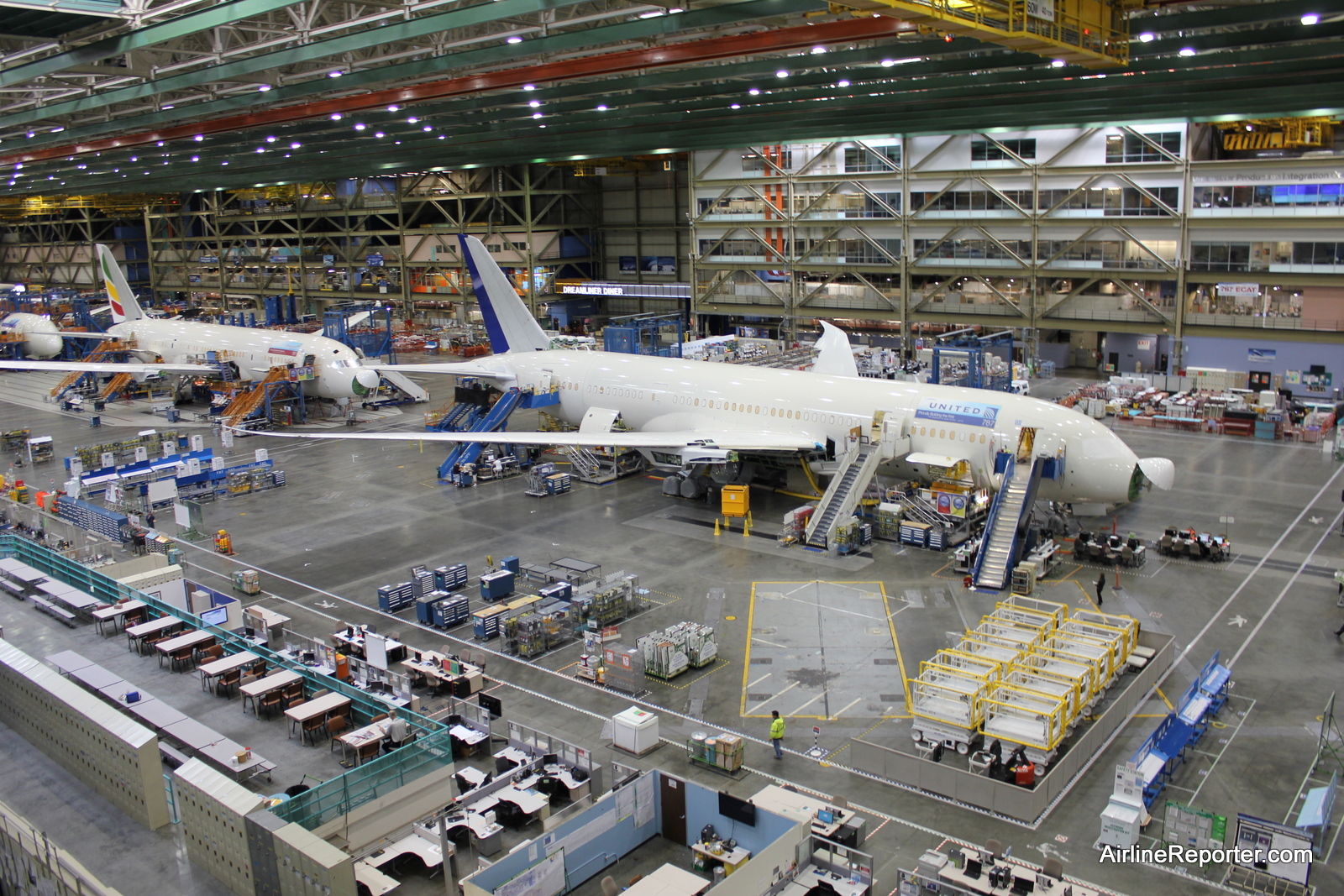
Dreamliner in the factory

Airbus A380 Photo Gallery

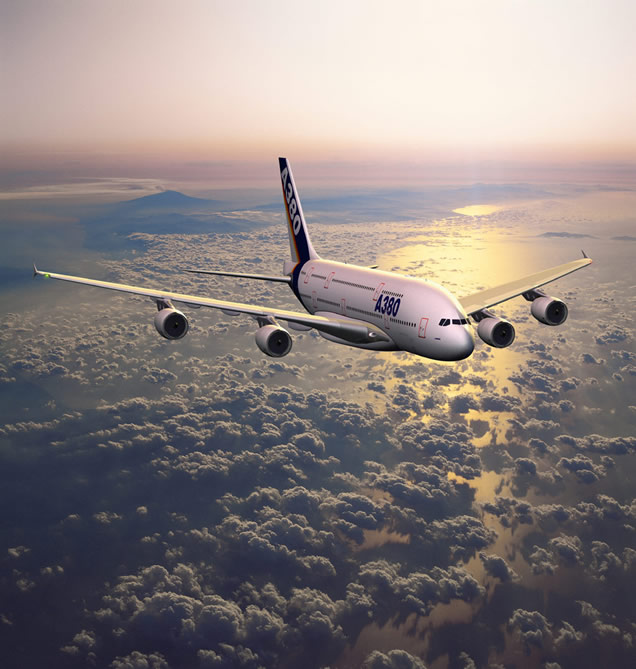
A380 in flight


Crowd gathers around unveiling of A380


Singapore Airline's A380 in flight


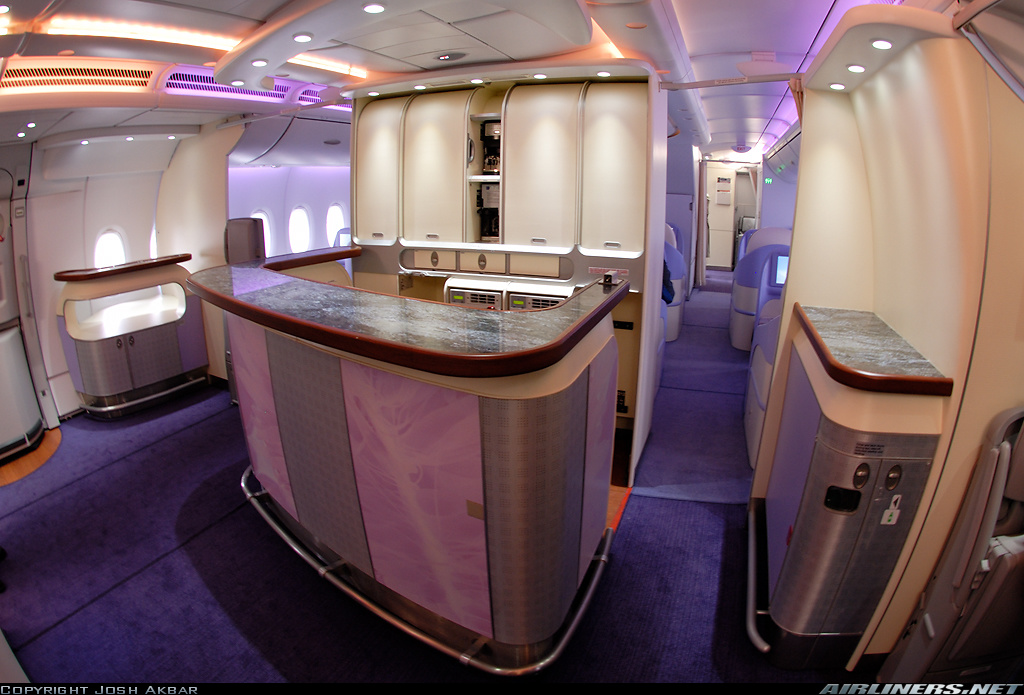
Luxurious interior of A380

Spacious seats - What size can offer

Concorde Successor?

Its been 7 years since the Concorde was retired. Now, the Aerion Supersonic Business Jet (SBJ) promises to bring supersonic air travel back into reality. Right now, it is undergoing proof-of-concept aerodynamic testing in NASA wind tunnels and under the belly of a NASA F-15 (TechNewsDaily).

The SBJ is planned to carry up to 12 passengers at speeds of Mach 1.5.

Design...

The new wing design of the Concorde is, according to Brian Barents, vice chairman of Aerion, the prime factor that allows the SBJ to fly economically at subsonic and supersonic speeds, because it reduces drag.

This wing design can also be seen on the F-104 Starfighter, but according the Barents, it is the advancement of materials, such as carbon fiber, that enabled this design to be incorporated onto a passenger plane.

Subsonic speeds...

Because of the wing design of the SBJ, it will be able to fly economically at subsonic speeds, which means that the SBJ will able to operate in the US where supersonic flight is banned due to sonic booms. Its speed will remain at Mach 0.98, which reduces coast-to-coast flight by 41 minutes vs conventional aircraft (TechNewsDaily).

The Future...

High performance while satisfying environmental regulations, the SBJ already has orders and the company hopes that this new aircraft will be certified by the FAA and ready to go by 2015.

The Fall of the Concorde

The Concorde, introduced in 1976, was the first passenger airliner that traveled at supersonic speeds. This was the product of a joint venture between British and French companies and remained in operation until 2003.

The Concorde could supercruise at Mach 2.02 and had a top speed of Mach 2.04.

Design...

The Concorde utilized a revolutionary dart wing design for passenger planes, obviously for increased speed. It also had a double-delta wing design that allowed for landing at lower speeds. Also, it had a nose that could "droop" down that allowed for better landing visibility.

Early production setback...

The original plan for the Concorde was to have 300 built. However, due to an Arab oil embargo, oil prices rose steeply and orders were swiftly cancelled. In the end, only 20 aircraft were ever built. These were operated by British Airways, Air France, Singapore Airlines, and Braniff International Airways.

Retirement...

The Concorde was facing retirement by the 21st century. It had a dated cockpit with analog dials and controls (since there were no competing aircraft, there was no pressure to upgrade) and an airframe worn down by close to 30 years of service.

The crash on July 25, 2000 sealed the deal. Although this was the only accident in Concorde history, the lost confidence in Concorde was never regained and passenger numbers remained low.


Finally, on November 26, 2003, Concorde G-BOAF of British Airways, the last Concorde still in service, made is retirement flight to Filton, Bristol, UK, her place of birth.


Fuel Efficiency (or inefficiency)...

The Concorde was a fuel consuming beast. The passenger mile to US gallon ratio for a 747 was 109 while the ratio for a Concorde was 14.

An Interesting Fact...
  • The Concorde could cross the Atlantic in 3 hours, which meant that European passengers could arrive earlier than when they left!

Big or Small? (A380 vs 787)

Boeing and Airbus have been head-to-head in trying to dominate the commercial airliner market since 2001 (year Airbus SAS was established). Since then, both airliner manufacturers have pumped out thousands of planes and many new designs. The two most recent ones are the A380 "behemoth" from Airbus and the B787 Dreamliner "slick and fast" from Boeing. Both planes boast better fuel efficiency and lower operating costs but exactly which is better?


  • 49% more seating than the Boeing 747 and 4 times more than the Boeing 787
  • Expensive ($280 million)
  • More entertainment (bars and Jacuzzis)
  • The larger area of the A380 is possibility for many airlines to incorporate shops, arcades, and restaurants to make travelling much more enjoyable
  • Can be used to carry heavy cargo
  • More people one trip = less fuel (more fuel used per trip but less trips)
  • Very quiet

  • Fast and slick (means you get there faster)
  • Cheap
  • Less entertainment
  • Airports do not have to redesign to accommodate the 787
  • Lighter weight = less fuel (less fuel used per trip but more trips)
  • Very quiet
  • Pressurized for lower altitude and high humidity (sited from)
Specifications... (A380)

1. A380-800
  • Cockpit Crew: 2
  • Seating Capacity: 525 (3-class).
  • 644 (2-class).
  • 853 (1-class).
  • Length: 73 m (239 ft. 6 in.).
  • Span: 79.8 m (261 ft. 10 in.).
  • Height: 24.1 m (79 ft. 1 in.).
  • Wheelbase: 30.4 m (99 ft. 8 in.).
  • Outside fuselage width: 7.14 m (23 ft. 6 in.).
  • Cabin width, main deck: 6.60 m (21 ft. 8 in.).
  • Cabin width, upper deck: 5.94 m (19 ft. 6 in.).
  • Wing Area: 845 m2 (9 100 sq. ft.).
  • Operating empty weight: 276 800 kg (610 200 lb.).
  • Maximum take-off weight: 560 000 kg (1 235 000 lb.).
  • Maximum Payload: 90 800 kg (200 000 lb.).
  • Cruising Speed: Mach 0.85.
  • Maximum Cruising Speed: Mach 0.89.
  • Maximum Speed: Mach 0.96.
  • Take-off Run at Maximum Takeoff Weight (MTOW): 2 750 m (9 020 ft.).
  • Range at design load: 15 200 km (8 200 nmi.).
  • Service Ceiling: 13 115 m (43 000 ft.).
  • Maximum Fuel Capacity: 310 000 L (81 890 US Gal.).
  • Engines (4x): GP7270 (A380-861).
  • Trent 970/B (A380-841).
  • Trent 972/B (A380-842).

2. A380-800F
  • Cockpit Crew: 2
  • Seating Capacity: 12 couriers
  • Length: 73 m (239 ft 6 in)
  • Span: 79.8 m (261 ft 10 in)
  • Height: 24.1 m (79 ft 1 in)
  • Wheelbase: 30.4 m (99 ft 8 in)
  • Outside fuselage width: 7.14 m (23 ft 6 in)
  • Cabin width, main deck: 6.60 m (21 ft 8 in)
  • Cabin width, upper deck: 5.94 m (19 ft 6 in)
  • Wing area: 845 m² (9,100 sq ft)
  • Operating empty weight: 252,200 kg (556,000 lb)
  • Maximum take-off weight: 590,000 kg (1,300,000 lb)
  • Maximum payload: 152,400 kg (336,000 lb)
  • Cruising speed: Mach 0.85
  • Maximum cruising speed: Mach 0.89
  • Maximum speed: Mach 0.96
  • Take off run at Maximum Takeoff Weight (MTOW): 2,900 m (9,510 ft)
  • Range at design load: 10,400 km (5,600 nmi)
  • Service ceiling: 13,115 m (43,000 ft)
  • Maximum fuel capacity: 310,000 L (81,890 US gal),356,000 L (94,000 US gal) option
  • Engines (4 x): GP7277 (A380-863F)Trent 977/B (A380-843F)

Specifications... (787 Dreamliner)

Source: http://en.wikipedia.org/wiki/Boeing_787#Specifications

Model787-3787-8787-9
Flight crewTwo
Passengers290–330210–250250–290
Length186 ft (57 m)206 ft (63 m)
Wingspan170 ft (52 m)197 ft (60 m)208 ft (63 m)
Wing sweepback32.2°
Height55 ft 6 in (16.92 m)
Fuselage height19 ft 5 in (5.91 m)
Fuselage width18 ft 11 in (5.75 m)
Cabin width18 ft (5.49 m)
Cargo capacity4,400 ft³ (124.6 m³) 28 LD35,400 ft³ (152.9 m³) 36 LD3
Empty weight223,000 lb (101,151.1 kg)242,000 lb (109,769.4 kg)254,000 lb (115,212.5 kg)
Maximum takeoff weight364,000 lb (165,107.6 kg)484,000 lb (219,538.7 kg)540,000 lb (244,939.9 kg)
Cruise speedMach 0.85 (903 km/h, 561 mph, 487 knots, at 40,000 ft/12.19 km)
Maximum cruise speedMach 0.89 (945 km/h, 587 mph, 510 knots, at 40,000 ft/12.19 km)
Range, fully loaded (not max payload)2,500 – 3,050 NM
(4,650 – 5,650 km)
7,650 – 8,200 NM
(14,200 – 15,200 km)
8,000 – 8,500 NM
(14,800 – 15,750 km)
Maximum fuel capacity33,528 US gal (126,917 L)36,693 US gal (138,898 L)
Service ceiling43,000 ft (13.1 km)
Engines (2×)General Electric GEnx or Rolls-Royce Trent 1000
Maximum thrust capability53,000 lbf (235.8 kN)64,000 lbf (284.7 kN)70,000 lbf (311.4 kN)

The de Havilland Comet


The de Havilland Comet, the world's first ever commercial jet airliner to reach production. Developed and manufactured by de Havilland, the Comet was considered a landmark British aeronautical design. It not only revolutionised air travel but also brought the world closer together with its high speed, compared to older turbo prop planes.

Although not used in the commercial world, the Comet's military derivative, Hawker Siddeley Nimrod, is still in service and is expected to serve the Royal Air Force until the 2020s, almsot 70 years after its first flight.

Design and Development...

The Comet was designed to fulfill the need for a transatlantic airliner and Sir Geoffrey de Havilland, head of the de Havilland company, used his power and influence, plus his company's expertise with jets, to persuade the Brabazon Commitee that a transatlantic jet mailplane is needed after the war. Subsequently, the Commitee accepted de Havilland's proposal, calling it the Type IV (of five designs), and awarded the production contract to de Havilland's DH.106. The British Overseas Airways Corporation (BOAC) found the Type IV rather attractive and in the last month of 1945, agreed to buy ten aircraft.

The Type IV was officially christened Comet in December 1947. First deliveries were expected five years later. The first flight of the Comet was held on July 27th, 1949, and lasted for 31 minutes, by de Havilland Chief Test Pilot John Cunningham, a famous wartime night-fighter pilot. It was then publicly displayed at the 1949 Farnborough Airshow before beginning flight trials. A second prototype made its maiden flight a year later.

The Comet has an all-metal low-wing cantilever monoplane, and was powered by four jet engines. About the size of a Boeing 737, the Comet was quite luxurious for the first jet airliner. There was lots of room, with 36 seats to each aircraft, and each had its own ashtray. The galley served hot and cold food and drinks, and there was even a bar. Men's and Women's washrooms were seperate, which is something you don't see on modern airliners, and the passenger cabin was much quieter compared to its propeller-driven airliners counter-parts. The Comet's four-man cockpit held two pilots, a navigator and flight engineer. The Comet was also the first pressurised jet-propelled commercial aircraft.

de Havilland's clean, low-drag design featured many unique or innovative design elements, including a swept leading edge, integral wing fuel tanks and four wheel bogie main undercarriage units. Emergencies were countered with lift rafts, which were storeed in the wings near the engines and every seat had a life vest stowed under each seat bottom.

The Comet was powered by two de Havilland Ghost 50 Mk1 turbojet engines buried in the wings close to the fuselage. British engineers chose this configuration as it avoided the drag created by podded engines and allowed fin and rudder, since the hazards of asymmetric, or non-balanced thrust, were reduced. The engines' higher mounting on the wings also lessened the risk of ingestion damage, which is a major problem for turbine engines. However, this design does have its setbacks, such as increased structural weight and complexity of the air frame, as well as a higher chance for wing failure when an engine is on fire, which was cited as the main reason Boeing Aircraft Company chose podded engines over engines buried in the wings.

The Comet's skin is a composition of new and advanced alloys, chemically bonded together with Redux, which is a type of epoxy adhesive, and riveted. It saved weight and reduced the risk of fatigue cracks spreading from the rivets.

Testing...

When the Comet went into service on May 2nd, 1952, it was the most exhaustively tested airliner in history. Water tanks were used to test airframe for metal fatigue by repeatedly pressuring and depressuring the airframe through more than 16 000 cycles, which is equivalent to about 40 000 hours of airline service. The windows were also tested to their max capabilities, and one window frame survived a massive 100 psi, which about 1 250% over the maximum pressure it would encounter in service.

Early Comet disasters...

Early versions of the Comet suffered from catastrophic metal fatigue, which was the root cause of a string of well-publicised accidents. The first of these occured on January 10th, 1954 when Comet G-ALYP ("Yoke Peter"), BOAC Flight 781, broke up in flight mysteriously and crashed into the Mediterranean off the coast of the Italian island Elba. There were no survivors. The entirely Comet fleet was subsequently grounded while the Abell Commitee met to determine the cause of the crash. The conclusion was fire, and modifications were made to the aircraft to protect the engines and wings from damage which might start another fire. However, three months later, another crash of the sort occured in the waters near Naples. Investigators were extremely puzzled and a large investigation board was formed under the direction of the Royal Aircraft Establishment (RAE). They subjected Comet airframes to pressurisation cycles and found the cause of the crashes was metal fatigue. The Comets were redesigned and most served with the military, until 1958 when it resumed commercial service, by which time the much-improved Comet 4 was introduced, and became the first jet airliner to enter transatlantic service. However, by then, United States aircraft manufacturers caught up with Boeing's 707 jetliner and Douglas' DC-8, which were both faster and cost effective, rendering the Comet less profitable. De Havilland later went on to long-range missiles, and in 1962 went back to the airline world with the three-engine jetliner, Trident, but was beat again by Boeing with its 727, also a tri-jet.

De Havilland's hard-learned lessons benefited aircraft manufacturers all over the world, and according to John Cunningham, representatives from Boeing and Douglas "admitted that if it had not been for our problems, it would have happened to them." [Faith 1996, pp. 158-165]

Specifications... (Comet 4)

General characteristics

Crew: 4
Capacity: 56-109 passengers
Length: 34 m (112 ft)
Wingspan: 35 m (115 ft)
Height: 9 m (30 ft)
Wing area: 2,120 ft² (197 m²)
Airfoil: NACA 63A116 mod root, NACA 63A112 mod tip
Empty weight: 75,400 lb (34,200 kg)
Loaded weight: 162,000 lb (73,470 kg)
Powerplant: 4× Rolls-Royce Avon Mk 524 turbojets, 10,500 lbf (46.8 kN) each

Performance

Maximum speed: 500 mph (430 kn, 810 km/h)
Range: 2,800 nmi (3,225 mi, 5,190 km)
Service ceiling: 40,000 ft (12,000 m)

Boeing 787 Dreamliner


The Boeing 787 Dreamliner is a mid-sized, twin engine jet airliner, being developed by Boeing Commercial Airplanes. Although not as big and luxurious as the Airbus A380, the Dreamliner is very fuel-efficient. It is the first major airliner to use composite materials for most of its construction, and it is also innovative in collaborate management approach with suppliers.

The Dreamliner's original development designation was 7E7, but was changed to 787 on January 28th, 2008.

Design...

1. Features

The 787 features lighter-weight construction. Its materials (by weight) are: 50% composite, 20% aluminum, 15% titanium, 10% steel, 5% other. Composite materials are significantly lighter and stronger than traditional aircraft materials, making the 787 a very light aircraft for its capabilities. By volume, the 787 will be 80% composite. Each 787 contains approximately 35 tonnes of carbon fiber reinforced plastic, made with 23 tonnes of carbon fiber. Composites are used on fuselage, wings, tail, doors, and interior. Aluminum is used on wing and tail leading edges, titanium used mainly on engines with steel used in various places.

The longest-range 787 variant can fly 8,000 to 8,500 nautical miles (14,800 to 15,700 km), enough to cover the Los Angeles to Bangkok or New York City to Taipei routes. It will have a cruise speed of Mach 0.85 (561 mph, 903 km/h at typical cruise altitudes).

he 787 will seat 240 in two-class domestic configuration, with a 46-in (116.8 cm) pitch for first class and a 34-in (86.4 cm) pitch for coach class. 296 passengers can be seated in a high-density 3+2+3 coach arrangement with 36-in (91.4 cm) Business and 32-in (81.3 cm) Coach pitch. Up to 234 passengers may be seated in a three-class setup that uses 61-in (154.9 cm) pitch in First Class (2+2+2 or 1+2+1), 39-in (99 cm) pitch for Business (2+3+2 or 2+2+2) and 32-in (81.3 cm) for Coach (2+4+2). Cabin interior width is approximately 18 feet (547 cm) at armrest, and was increased by 1 inch (2.5 cm) over what was originally planned. The 787's interior cabin width is a full 15 in (38 cm) greater than that of the Airbus A330 and A340, but 5 in (13 cm) narrower than the proposed A350-800 XWB. For economy class in 2+4+2 or 3+2+3 arrangements, seat-bottom widths will be 18.5 in (47 cm), comparable to that found on the Boeing 777. For 3+3+3 seating, the seat widths would be approximately 17.2 in (43.7 cm), the same as those found on the Boeing 737. The vast majority of airlines are expected to select the 3+3+3 configuration on the 787.

The cabin windows are larger than others currently on in-service civil air transport (27 cm by 47 cm), with a higher eye level, so passengers can see the horizon, with electrochromism-based "auto-dimming" (smart glass) to reduce cabin glare and maintain transparency. These are to be supplied by PPG. Light-emitting diode (LED) cabin lighting (three color) will be used instead of fluorescent tubes, allowing the aircraft to be entirely 'bulbless' and have 128 color combinations.

A version of Ethernet—Avionics Full-Duplex Switched Ethernet (AFDX) / ARINC 664—will be used to transmit data between the flight deck and aircraft systems. The flight deck features LCD multi-function displays, all of which will use an industry standard GUI widget toolkit (Cockpit Display System Interfaces to User Systems / ARINC 661). The Lockheed Martin Orio spacecraft will use a glass cockpit derived from Rockwell Collins' 787 flight deck. Like other Boeing airliners, the 787 will use a yoke instead of a side-stick.

The internal pressure will be increased to the equivalent of 6000 feet (1800 m) altitude instead of the 8000 feet (2400 m) on conventional aircraft. According to Boeing, in a joint study with Oklahoma State University, this will significantly improve passenger comfort. Higher humidity in the passenger cabin is possible because of the use of composites (which do not corrode). Cabin air is provided by electrically driven compressors using no engine bleed air. An advanced cabin air-conditioning system provides better air quality: Ozone is removed from outside air; HEPA filters remove bacteria, viruses and fungi; and a gaseous filtration system removes odors, irritants and gaseous contaminants.

Bleedless turbofans imply the elimination of superheated air conduits normally used for de-icing, aircraft power, and other functions. These systems are to be replaced by an all-electrical system. Another new system is a wing ice protection system provided by Ultra Electronics Controls Division of the UK that uses electro-thermal heater mats attached to the aircraft slats, special electrical harnesses for transferring the electrical power to the heater mats as well as system control and power switching technology.

An Active Gust Alleviation system, similar to the system that Boeing built for the B-2 bomber, improves ride quality. Boeing, as part of its "Quiet Technology Demonstrator 2" project, is experimenting with several engine noise-reducing technologies for the 787. Among these are a redesigned air inlet containing sound-absorbing materials and redesigned exhaust duct covers whose rims are tipped in a toothed pattern to allow for quieter mixing of exhaust and outside air. Boeing expects these developments to make the 787 significantly quieter both inside and out.

Boeing engineers designed the 787 interior to better accommodate persons with mobility, sensory, and cognitive disabilities. For example, a 56-inch by 57-inch convertible lavatory includes a movable center wall that allows two separate lavatories to become one large, wheelchair-accessible facility.

Specifications...

Source: http://en.wikipedia.org/wiki/Boeing_787#Specifications


Model787-3787-8787-9
Flight crewTwo
Passengers290–330210–250250–290
Length186 ft (57 m)206 ft (63 m)
Wingspan170 ft (52 m)197 ft (60 m)208 ft (63 m)
Wing sweepback32.2°
Height55 ft 6 in (16.92 m)
Fuselage height19 ft 5 in (5.91 m)
Fuselage width18 ft 11 in (5.75 m)
Cabin width18 ft (5.49 m)
Cargo capacity4,400 ft³ (124.6 m³) 28 LD35,400 ft³ (152.9 m³) 36 LD3
Empty weight223,000 lb (101,151.1 kg)242,000 lb (109,769.4 kg)254,000 lb (115,212.5 kg)
Maximum takeoff weight364,000 lb (165,107.6 kg)484,000 lb (219,538.7 kg)540,000 lb (244,939.9 kg)
Cruise speedMach 0.85 (903 km/h, 561 mph, 487 knots, at 40,000 ft/12.19 km)
Maximum cruise speedMach 0.89 (945 km/h, 587 mph, 510 knots, at 40,000 ft/12.19 km)
Range, fully loaded (not max payload)2,500 – 3,050 NM
(4,650 – 5,650 km)
7,650 – 8,200 NM
(14,200 – 15,200 km)
8,000 – 8,500 NM
(14,800 – 15,750 km)
Maximum fuel capacity33,528 US gal (126,917 L)36,693 US gal (138,898 L)
Service ceiling43,000 ft (13.1 km)
Engines (2×)General Electric GEnx or Rolls-Royce Trent 1000
Maximum thrust capability53,000 lbf (235.8 kN)64,000 lbf (284.7 kN)70,000 lbf (311.4 kN)

Airbus A380

The Airbus A380 is a double-deck, wide-body, four-engine airliner manufactured by the European corporation Airbus, an E.A.D.S. subsidiary. The largest passenger airliner in the world, the A380 made its maiden flight on 27 April, 2005 from Toulouse, France, and made its first commercial flight on 25 October, 2007 from Singapore to Sydney with Singapore Airlines. The aircraft was known as the Airbus A3XX during much of its development phase, but the nickname, Superjumbo, has since become associated with it.

The A380's upper deck extends along the entire length of the fuselage. This allows for a cabin with 50% more floor space than the next-largest airliner, the Boeing 747-400, and provides seating for 525 people in standard three-class configuration, or up to 853 people in all economy class configuration. The A380 is offered in passenger and freighter versions. The A380-800, the passenger model, is the largest passenger airliner in the world, but has a shorter fuselage than the Airbus A340-600 which is Airbus' next biggest passenger aeroplane. The A380-800F, the freighter model, is offered as one of the largest freight aircraft, with a listed payload capacity exceeded only by the Antonov An-225. The A380-800 has a design range of 15,200 kilometres (8,200 nmi), sufficient to fly from New York to Hong Kong for example, and a cruising speed of Mach 0.85 (about 900 km/h or 560 mph at cruise altitude).

Design...

The new Airbus is sold in two models. The A380-800 was originally designed to carry 555 passengers in a three-class configuration or 853 passengers (538 on the main deck and 315 on the upper deck) in a single-class economy configuration. In May 2007, Airbus began marketing the same aircraft to customers with 30 fewer passengers (now 525 passengers) traded for 370 km (200 nmi) more range, to better reflect trends in premium class accommodation. The design range for the -800 model is 15,200 km (8,200 nmi). The second model, the A380-800F freighter, will carry 150 tonnes of cargo 10,400 km (5,600 nmi). Future variants may include an A380-900 stretch seating about 656 passengers (or up to 960 passengers in an all economy configuration) and an extended range version with the same passenger capacity as the A380-800.

The A380's wing is sized for a Maximum Take-Off Weight (MTOW) over 650 tonnes in order to accommodate these future versions, albeit with some strengthening required. The stronger wing (and structure) is used on the A380-800F freighter. This common design approach sacrifices some fuel efficiency on the A380-800 passenger model, but Airbus estimates that the size of the aircraft, coupled with the advances in technology described below, will provide lower operating costs per passenger than all current variants of Boeing 747. The A380 also features wingtip fences similar to those found on the A310 and A320 to alleviate the effects of wake turbulence, increasing fuel efficiency and performance.

1. Flight Deck

Airbus A380 seat map.

Airbus used similar cockpit layout, procedures and handling characteristics to those of other Airbus aircraft, to reduce crew training costs. Accordingly, the A380 features an improved glass cockpit, and fly-by-wire flight controls linked to side-sticks. The improved cockpit displays feature eight 15-by-20 cm (6-by-8-inch) liquid crystal displays, all of which are physically identical and interchangeable. These comprise two Primary Flight Displays, two navigation displays, one engine parameter display, one system display and two Multi-Function Displays. These MFDs are new with the A380, and provide an easy-to-use interface to the flight management system—replacing three multifunction control and display units. They include QWERTY keyboards and trackballs, interfacing with a graphical "point-and-click" display navigation system. One or two HUD (Head Up Display) is optional.

2. Engines

The A380 can be fitted with two different types of engines: A380-841, A380-842 and A380-843F with Rolls-Royce Trent 900, and the A380-861 and A380-863F with Engine Alliance GP7000 turbofans. The Trent 900 is a derivative of the Trent 800, and the GP7000 has roots from the GE90 and PW4000. The Trent 900 core is a scaled version of the Trent 500, but incorporates the swept fan technology of the stillborn Trent 8104. The GP7200 has a GE90-derived core and PW4090-derived fan and low-pressure turbo-machinery. Only two of the four engines are fitted with thrust reversers.

Noise reduction was an important requirement in the A380's design, and particularly affects engine design. Both engine types allow the aircraft to achieve QC/2 departure and QC/0.5 arrival noise limits under the Quota Count system set by London Heathrow Airport, which is expected to become a key destination for the A380.

3. Fuel

The A380 can run on mixed synthetic jet fuel with a natural-gas-derived component. A three hour test flight on Friday, February 1st, 2008 between the Airbus company facility at Filton in the UK to the main Airbus factory in Toulouse, France, was a success. One of the A380's four engines used a mix of 60 percent standard jet kerosene and 40 percent gas to liquids (GTL) fuel. The aircraft needed no modification to use the GTL fuel, which was designed to be mixed with regular jet fuel. Sebastien Remy, head of Airbus SAS's alternative fuel program, said the GTL used was no cleaner in CO2 terms than regular fuel but it had local air quality benefits because it contains no sulphur.

4. Advanced materials

While most of the fuselage is aluminium, composite materials make up 25% of the A380's airframe, by weight. Carbon-fibre reinforced plastic, glass-fibre reinforced plastic and quartz-fibre reinforced plastic are used extensively in wings, fuselage sections (such as the undercarriage and rear end of fuselage), tail surfaces, and doors. The A380 is the first commercial airliner with a central wing box made of carbon fibre reinforced plastic, and it is the first to have a wing cross-section that is smoothly contoured. Other commercial airliners have wings that are partitioned span-wise in sections. The flowing, continuous cross-section allows for maximum aerodynamic efficiency. Thermoplastics are used in the leading edges of the slats. The new material GLARE (GLAss-REinforced fibre metal laminate) is used in the upper fuselage and on the stabilizers' leading edges. This aluminium-glass-fibre laminate is lighter and has better corrosion and impact resistance than conventional aluminium alloys used in aviation. Unlike earlier composite materials, it can be repaired using conventional aluminium repair techniques. Newer weldable aluminium alloys are also used. This enables the widespread use of laser beam welding manufacturing techniques — eliminating rows of rivets and resulting in a lighter, stronger structure.

5. Passenger Provisions

The A380 produces 50% less cabin noise than a 747 and has higher cabin air pressure (equivalent to an altitude of 1500 metres (5000 feet) versus 2500 metres (8000 feet)); both features are expected to reduce the effects of travel fatigue. The upper and lower decks are connected by two stairways, fore and aft, wide enough to accommodate two passengers side-by-side. In a 555-passenger configuration, the A380 has 33% more seats than a 747-400 in a standard three-class configuration but 50% more cabin area and volume, resulting in more space per passenger. Its maximum certified carrying capacity is 853 passengers in an all-economy-class configuration.

Compared to a 747, the A380 has larger windows and overhead bins, and 60 cm (2 feet) of extra headroom. The wider cabin allows for 48 cm (19 inch) wide economy seats instead of 43 cm (17 inch) seats on a 747, although the seat pitch of 81 cm (32 inch) is the same as that on a 747. Singapore Airline's economy-class seats feature 27 cm (10.6 inch) LCD screens in each seatback, as well as an AC power supply in most seats; business-class seats are 84 cm (34 inches) wide, can lie flat for sleeping, and have 39 cm (15.4 inch) LCD screens.

Airbus' initial publicity stressed the comfort and space of the A380's cabin, anticipating installations such as relaxation areas, bars, duty-free shops, and beauty salons. Virgin Atlantic Airways already offers a bar as part of its "Upper Class" service on its A340 and 747 aircraft, and has announced plans to include casinos, double beds, and gymnasiums on its A380s. Singapore Airlines offers twelve fully-enclosed first-class suites on its A380, each with one full and one secondary seat, full-sized bed, desk, personal storage, and 58-cm (23-inch) LCD screen at a 20% to 25% price premium over standard first class seating. Four of these suites are in the form of two "double" suites featuring a double bed. Emirates has not yet revealed their front-end A380 product although Qantas Airways has shown their product which features a long flat-bed that converts from the seat but does not have privacy doors. The Times (UK) newspaper has revealed that Emirates' first class passengers, will be able to shower on the A380.

Integration in the Infrastructure...

1.Ground Operations

Early critics claimed that the A380 would damage taxiways and other airport surfaces. However, the pressure exerted by its wheels is lower than that of a Boeing 747 or Boeing 777 because the A380 has 22 wheels, four more than the 747, and eight more than the 777. Airbus measured pavement loads using a 540-tonne (595 short tons) ballasted test rig, designed to replicate the landing gear of the A380. The rig was towed over a section of pavement at Airbus' facilities that had been instrumented with embedded load sensors.

Based on its wingspan, the U.S. F.A.A. classifies the A380 as a Design Group VI aircraft, and originally required a width of 60 m (200 ft) for runways and 30 m (100 ft) for taxiways, compared with 45 m (150 ft) and 23 m (75 ft) for Design Group V aircraft such as the Boeing 747. The FAA also considered limiting the taxi speed of the A380 to 25 km/h (15 mph) when operating on Group V infrastructure, but issued waivers related to the speed restriction and some of the proposed runway widening requirements. Airbus claimed from the beginning that the A380 could safely operate on Group V runways and taxiways, without the need for widening. In July 2007, the FAA and EASA agreed to let the A380 operate on 45 m runways without restrictions.

The A380 was designed to fit within an 80 × 80 m airport gate, and can land or take off on any runway that can accommodate a Boeing 747. Its large wingspan can require some taxiway and apron reconfigurations, to maintain safe separation margins when two of the aircraft pass each other. Taxiway shoulders may be required to be paved to reduce the likelihood of foreign object damage caused to (or by) the outboard engines, which overhang more than 25 m (80 ft) from the centre line of the aircraft. Any taxiway or runway bridge must be capable of supporting the A380's maximum weight. The terminal gate must be sized such that the A380's wings do not block adjacent gates, and may also provide multiple jetway bridges for simultaneous boarding on both decks. Service vehicles with lifts capable of reaching the upper deck should be obtained, as well as tractors capable of handling the A380's maximum ramp weight. The A380 test aircraft have participated in a campaign of airport compatibility testing to verify the modifications already made at several large airports, visiting a number of airports around the world.

2.Take-off and Landing Seperation

In 2005, the ICAO recommended that provisional separation criteria for the A380 on takeoff and landing be substantially greater than for the 747 because preliminary flight test data suggested a stronger wake turbulence for the first. These criteria were in effect while the ICAO's wake vortex steering group, with representatives from the J.A.A., Eurocontrol, the F.A.A., and Airbus, refined its 3-year study of the issue with additional flight testing. In September 2006, the working group presented its first conclusions to the ICAO, which rendered new interim recommendations on the issue in November 2006.

The ICAO advised that an aircraft trailing an A380 during approach should maintain a separation of 6 nmi, 8 nmi and 10 nmi respectively for non-A380 "Heavy", "Medium", and "Light" ICAO aircraft categories, compared with 4 nmi, 5 nmi and 6 nmi spacing for other "Heavy" aircraft. Another A380 following an A380 should maintain a separation of 4 nmi. On departure behind an A380, non-A380 "Heavy" aircraft are required to wait two minutes, and "Medium"/"Light" aircraft three minutes for time based operations. The ICAO also advised to use the suffix "Super" to the air traffic control to distinguish the A380 from other "Heavy" aircraft.

Airbus continued undertaking extensive comparative trials until December 2007 and expects the ICAO's wake vortex steering group to issue revised distances similar to those required by the Boeing 747.

Market...

Parallel to the design of the A380, Airbus conducted the most extensive and thorough ever undertaken market analysis in commercial aviation. As of 2007, Airbus estimated a demand for 1,283 passenger planes in the category VLA (Very Large Aircraft, with more than 400 seats) for the next 20 years if the airport congestion remains at the actual level. If the congestion increases, the demand could reach up to 1,771 VLAs. Most of this demand will be due to the urbanization and rapid economic growth in Asia.

The A380 will be used at relatively few routes, between the most saturated airports. Airbus also estimates a demand for 415 freighters in the category 120-tonne plus. Boeing, who offers the only competition in that class, the 747-8, estimates the demand for passenger VLAs at 590 and that for freighter VLAs at 370 for the period 2007-2026. In 2006 two industry analysts anticipated 400 and 880 A380 sales respectively by 2025.

As of February 2008, there were 191 orders for the A380, while there were 20 for the 747-8I (both not including VIP orders) and 81 for the 747-8F. The break-even for the A380 was initially supposed to be reached at 270 units. Due to the delays and the falling exchange rate of the US dollar, it increased to 420 units. In April 2007, Airbus CEO Louis Gallois said that break-even had risen further, but declined to give the new figure. As of April 2008, the list price of an A380 was US$ 317.2 to 337.5 million, depending on equipment installed.

Specifications...

1. A380-800
  • Cockpit Crew: 2
  • Seating Capacity: 525 (3-class).
  • 644 (2-class).
  • 853 (1-class).
  • Length: 73 m (239 ft. 6 in.).
  • Span: 79.8 m (261 ft. 10 in.).
  • Height: 24.1 m (79 ft. 1 in.).
  • Wheelbase: 30.4 m (99 ft. 8 in.).
  • Outside fuselage width: 7.14 m (23 ft. 6 in.).
  • Cabin width, main deck: 6.60 m (21 ft. 8 in.).
  • Cabin width, upper deck: 5.94 m (19 ft. 6 in.).
  • Wing Area: 845 m2 (9 100 sq. ft.).
  • Operating empty weight: 276 800 kg (610 200 lb.).
  • Maximum take-off weight: 560 000 kg (1 235 000 lb.).
  • Maximum Payload: 90 800 kg (200 000 lb.).
  • Cruising Speed: Mach 0.85.
  • Maximum Cruising Speed: Mach 0.89.
  • Maximum Speed: Mach 0.96.
  • Take-off Run at M.T.O.W.: 2 750 m (9 020 ft.).
  • Range at design load: 15 200 km (8 200 nmi.).
  • Service Ceiling: 13 115 m (43 000 ft.).
  • Maximum Feul Capacity: 310 000 L (81 890 US Gal.).
  • Engines (4x).: GP7270 (A380-861).
  • Trent 970/B (A380-841).
  • Trent 972/B (A380-842).
2. A380-800F
  • Cockpit Crew: 2
  • Seating Capacity: 12 couriers
  • Length: 73 m (239 ft 6 in)
  • Span: 79.8 m (261 ft 10 in)
  • Height: 24.1 m (79 ft 1 in)
  • Wheelbase: 30.4 m (99 ft 8 in)
  • Outside fuselage width: 7.14 m (23 ft 6 in)
  • Cabin width, main deck: 6.60 m (21 ft 8 in)
  • Cabin width, upper deck: 5.94 m (19 ft 6 in)
  • Wing area: 845 m² (9,100 sq ft)
  • Operating empty weight: 252,200 kg (556,000 lb)
  • Maximum take-off weight: 590,000 kg (1,300,000 lb)
  • Maximum payload: 152,400 kg (336,000 lb)
  • Cruising speed: Mach 0.85
  • Maximum cruising speed: Mach 0.89
  • Maximum speed: Mach 0.96
  • Take off run at M.T.O.W.: 2,900 m (9,510 ft)
  • Range at design load: 10,400 km (5,600 nmi)
  • Service ceiling: 13,115 m (43,000 ft)
  • Maximum fuel capacity: 310,000 L (81,890 US gal),356,000 L (94,000 US gal) option
  • Engines (4 x): GP7277 (A380-863F)Trent 977/B (A380-843F)

...

Contact

mailwebaviation@gmail.com
Search & Win